Parkinson's disease
Freezing of gait, shuffling and a shrinking stride respond to external rhythm. A visual, audio or haptic cue gives the brain a target for the next step.
Recommended —Rollz Motion Rhythm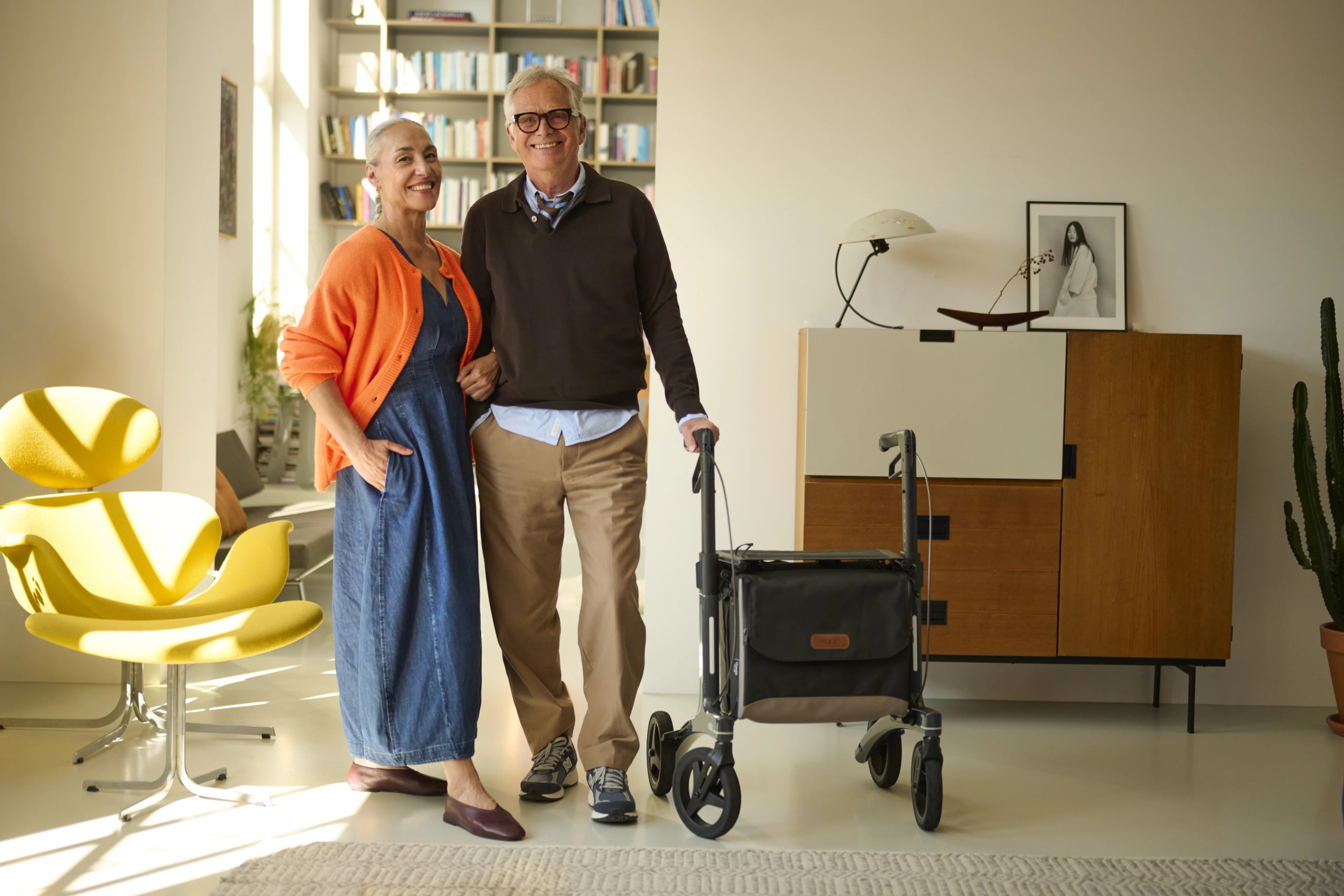
A rollator is a clinical aid — but it’s also how you get to the market, the garden, the grandchildren. Rollz is designed for both: engineered with therapists for real conditions, and built to keep your independence intact. Below, find the model that fits your need, the science behind it, and everything your care team might ask for.
Different conditions ask different things of a rollator. Here’s how Rollz responds to the most common ones — and where to start.
Freezing of gait, shuffling and a shrinking stride respond to external rhythm. A visual, audio or haptic cue gives the brain a target for the next step.
Recommended —Rollz Motion RhythmAltered balance and one-sided weakness call for a stable, supportive base. Sensory cueing is increasingly used to rebuild a steady, symmetrical walking pattern.
Recommended —Rollz Motion RhythmFatigue and fluctuating strength mean some days you walk and some days you need to rest. A rollator that converts to a transport chair adapts to the day you're having.
Recommended —Rollz MotionPainful hands, hips and knees need light effort and gentle support. An ultralight carbon frame and ergonomic brakes reduce the load on every joint.
Recommended —Rollz AirAfter a hip or knee replacement you need support that grows with you — lean on it while you heal, sit when you tire, convert to a chair for longer distances.
Recommended —Rollz MotionA wide, stable footprint, lockable brakes and a confident seat height lower the risk of falls and give you something dependable to trust on every outing.
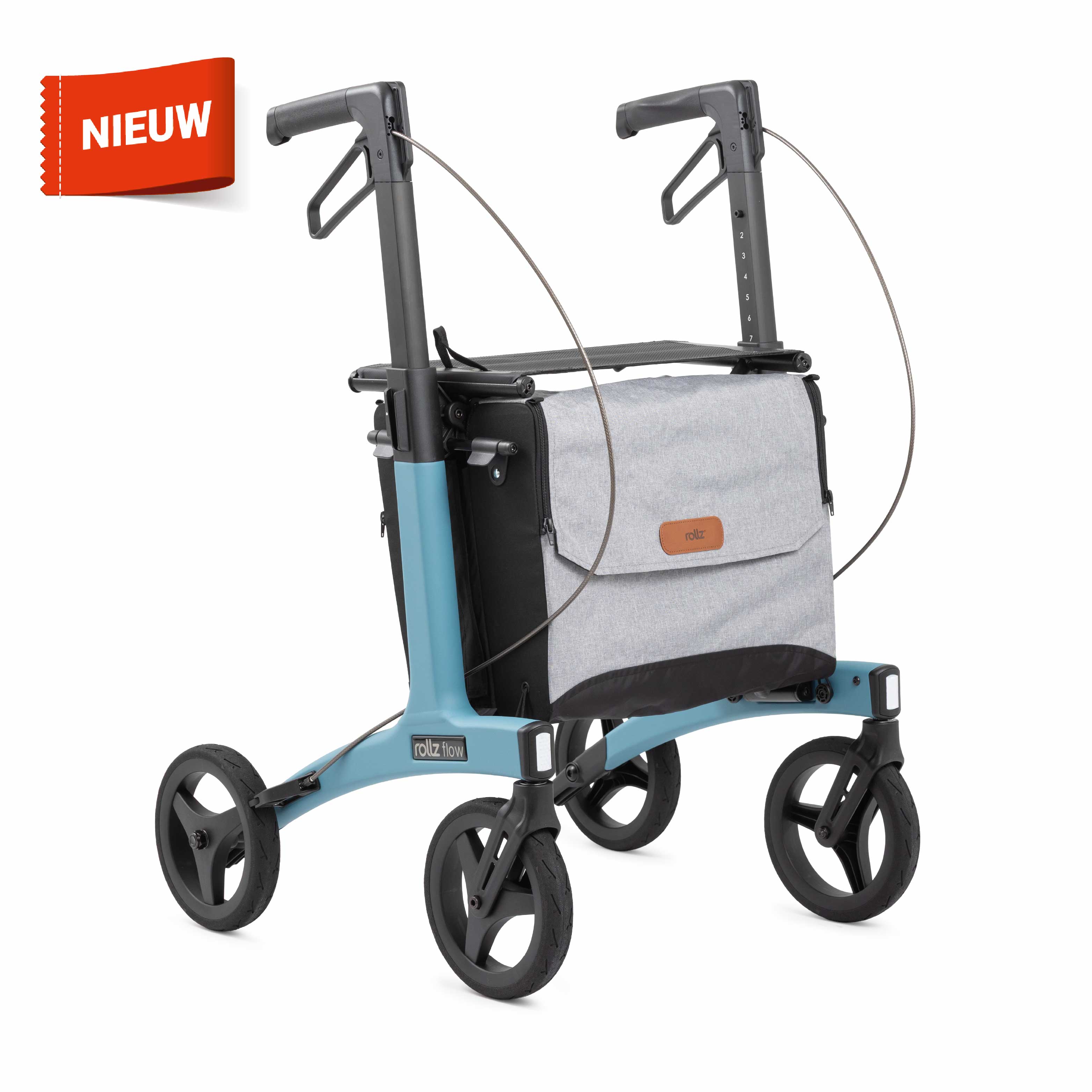
Recommended —Rollz Flow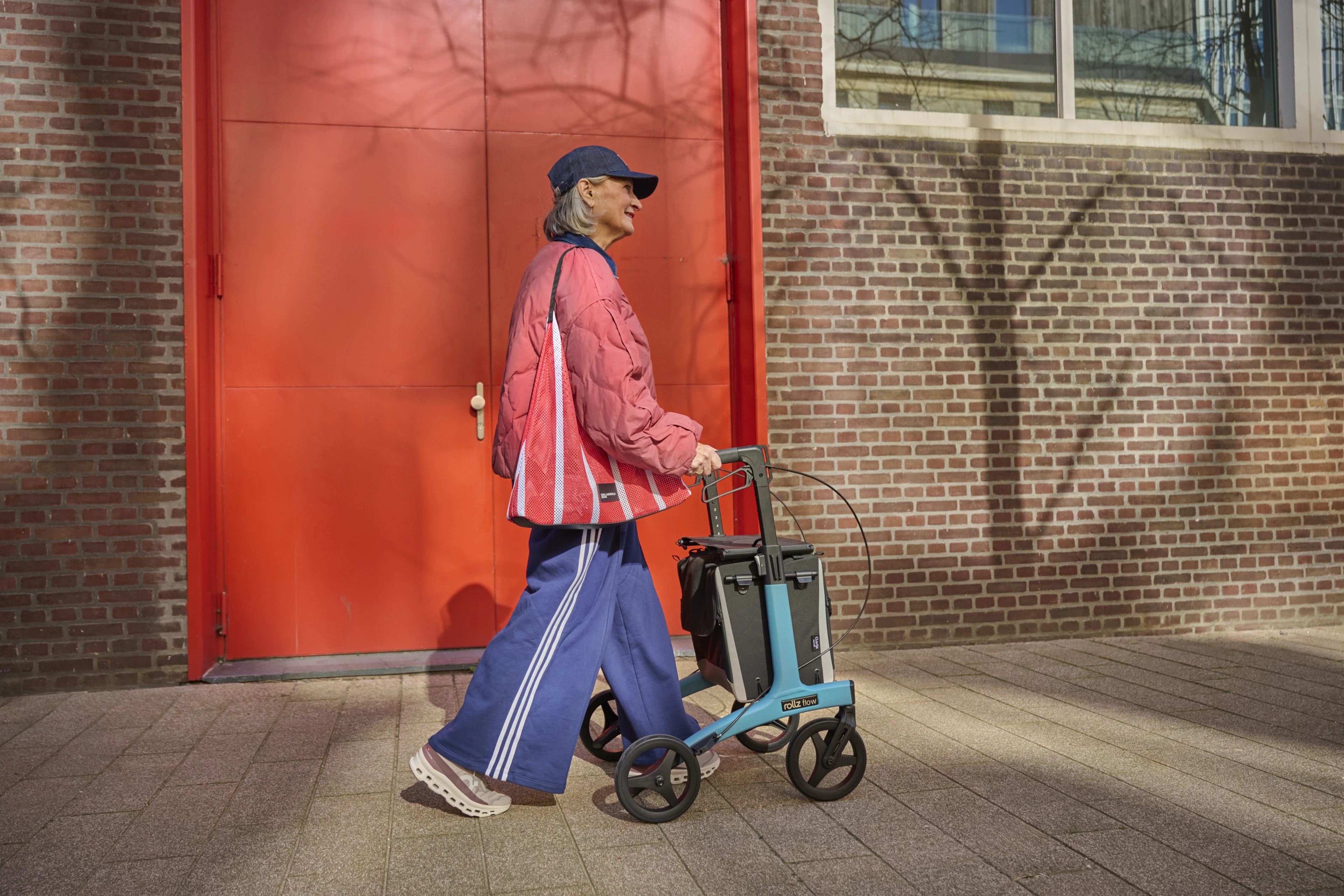
Freezing of gait is one of the hardest moments of Parkinson's. The Rhythm cueing module — a green laser line on the floor, a quiet metronome in the speaker, a gentle vibration in the grip — gives the brain the rhythm it needs to take the next step.
A bright green line projects onto the floor in front of you — a visual target the brain can step toward.
A quiet, adjustable beat from the handle speaker. Auditory cueing for the moments visual isn't enough.
Gentle pulses in the grip provide a third sensory channel — useful in noisy environments or low light.
Developed with neurologists and physiotherapists. Used in rehab programmes for Parkinson's, stroke, and MS.
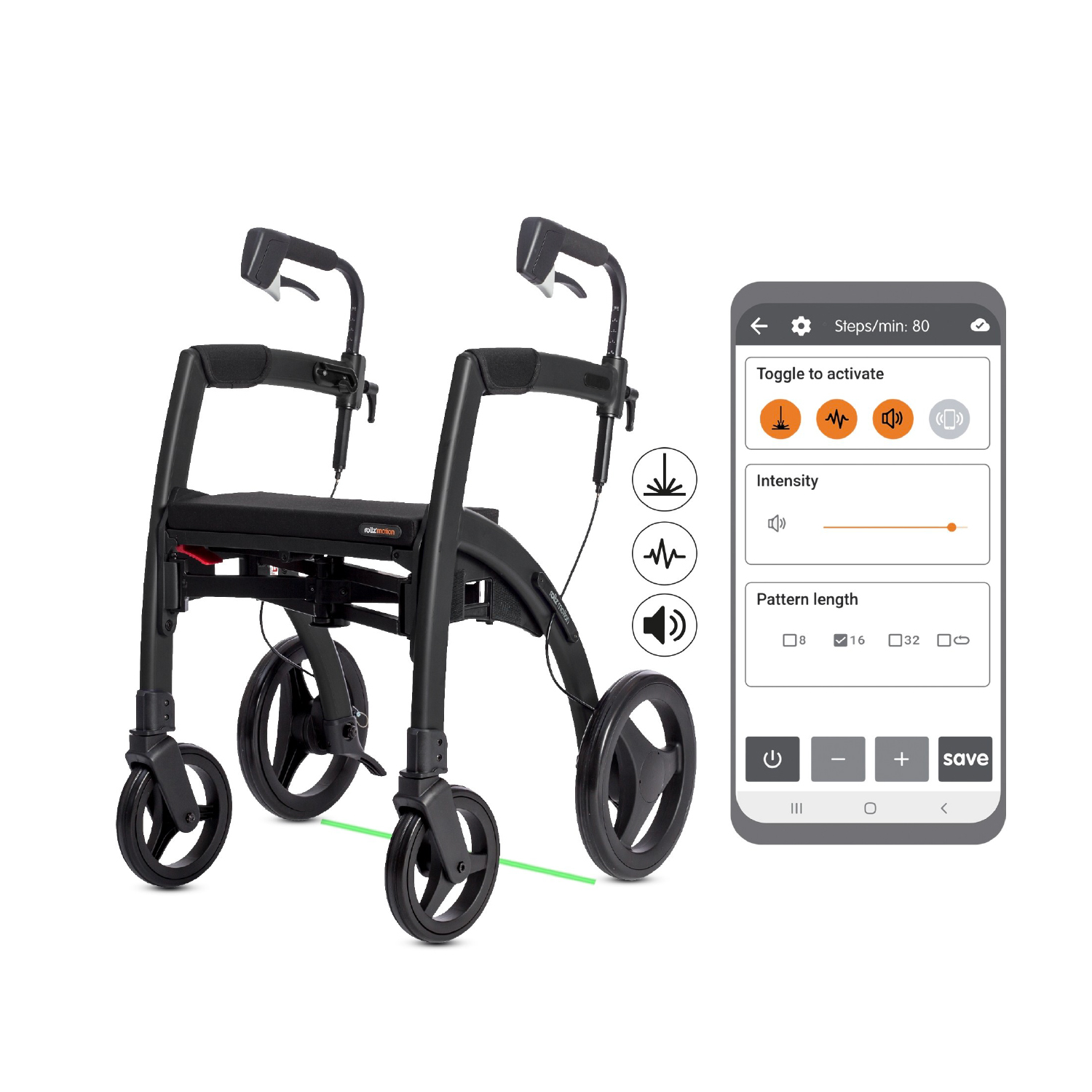
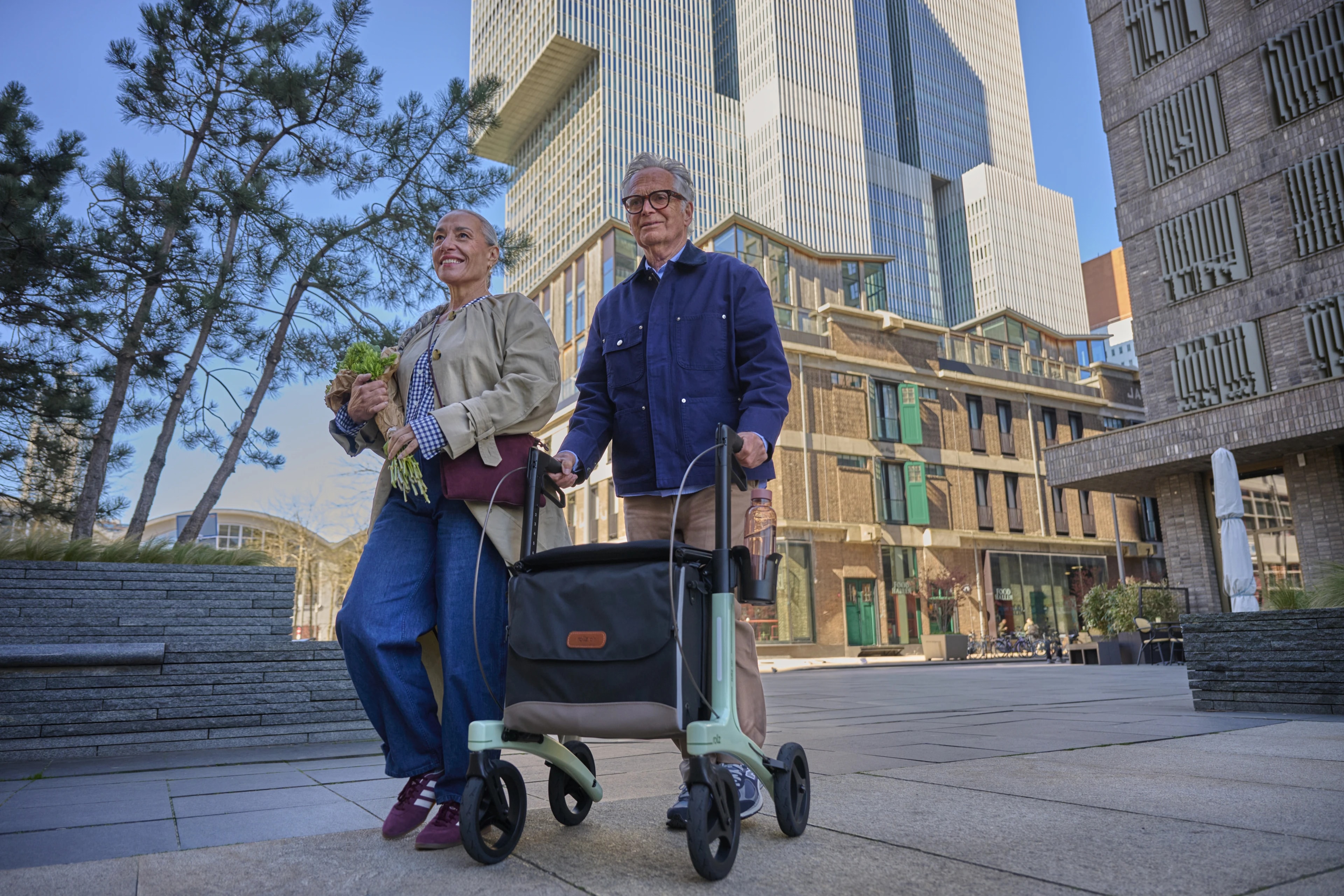
Rollz didn’t change where I go. It changed how I get there.
Whether you’re recommending to a patient or building a tender, here’s what you need from us.
Sensory cueing benefited 80% of Parkinson's patients in Rollz-cited studies. The Rhythm module is used in stroke and MS rehab programmes across Europe.
Recommended by physiotherapists and occupational therapists, with a service and repair network spanning 13+ European countries.
Downloadable spec sheets for tenders, insurance claims and reimbursement files. Reimbursement varies by country and insurer — our team can advise.
Premium aluminium and carbon frames, hand-finished components, and a 5-year frame warranty keep devices working for years.
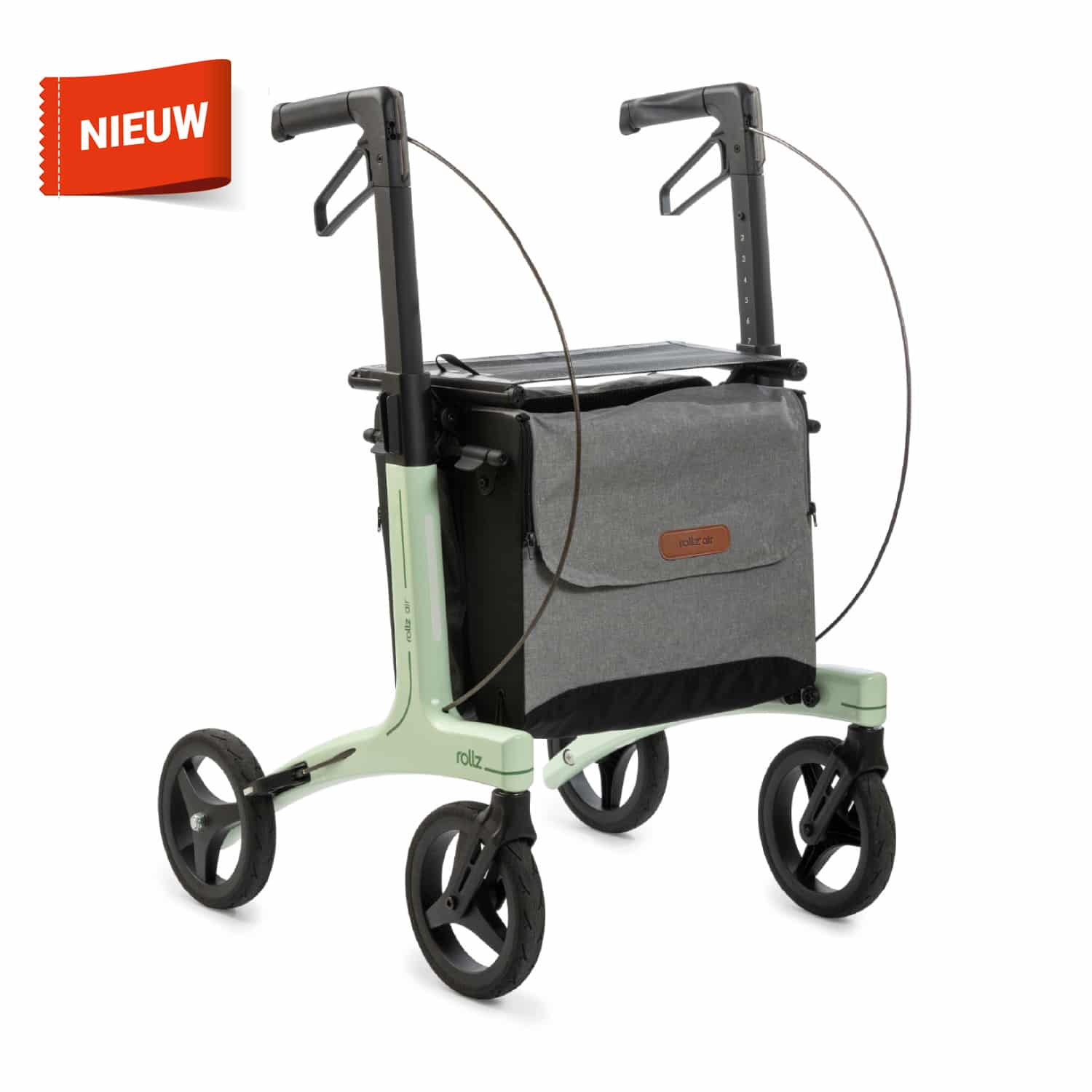
Cable-tensioned hand brakes with a parking lock hold the frame still while you sit, stand or rest.
A wide, balanced footprint stays planted on uneven ground, kerbs and thresholds.
A padded seat at a confident height means you can stop and rest the moment you need to.
Handle height ranges fit most users, so support meets your hands without stooping.
For anything condition-specific, our team — and your own clinician — are the best next step.
Answer six short questions to find the right Rollz for your needs, or talk to a specialist who can walk you through the options.